
Exclusive Insights · Pain Training with back pain
What to do, what not to do, and why movement often works better than rest for back pain.
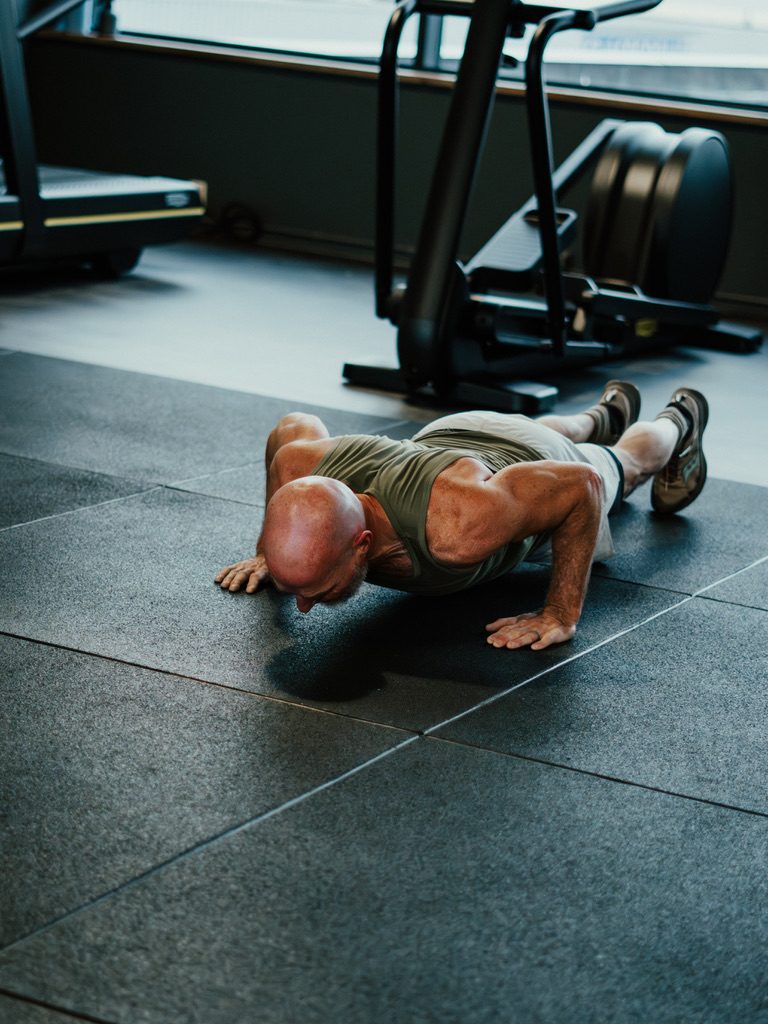
Back pain is one of the most common reasons people come to us. Often they've already taken it easy for a while, hoping it would go away by itself. Sometimes it does. But very often the back keeps nagging, or the pain keeps coming back.
Rest helps less than you think
For most back pain with no clear cause, such as lower back pain after lifting or sitting for a long time, staying active is better than lying down. Your muscles stay strong, your back stays supple and you learn again that moving is safe. Complete rest actually makes your back more sensitive.
Why your back keeps acting up
Your back doesn't work alone. Your hips, glutes and abdominal muscles together absorb a large part of the load. If they are weak or stiff, your lower back has to take more. Stress and poor sleep also make your back more sensitive. That's why we look beyond just your back.
What you can do
- Keep moving. Walking is one of the best things you can do. Start with short distances and build up.
- Train your hips and glutes. Exercises like the glute bridge and the hip hinge teach you to move from your hips instead of your lower back.
- Strengthen your core. Not with endless sit-ups, but with exercises like the dead bug, the bird dog and the side plank.
- Build up gradually. Start light and only increase when it feels right.
Four exercises to start with
1. Dead bug
Lie on your back with your arms up and your knees bent above your hips. Slowly extend one arm and the opposite leg, while keeping your lower back in contact with the floor. Three sets of eight per side.
2. Bird dog
On your hands and knees, extend one arm and the opposite leg at the same time. Keep your back still and straight. Three sets of eight per side.
3. Glute bridge
Lie on your back with your knees bent and push your hips up until your body forms a straight line. Squeeze your glutes. Three sets of twelve.
4. Hip hinge with a stick
Hold a stick along your back, touching the back of your head, your upper back and your tailbone. Bend forward from your hips without losing contact. This teaches you to lift without overloading your lower back. Three sets of ten.
Coach's tip
Use the traffic light. Rate your pain during training on a scale of 0 to 10. Up to 2 is fine. From 3 to 5 is okay, as long as it isn't worse the next morning. At 6 or higher, choose a lighter variation.
When to see your GP first?
Contact your GP or physiotherapist if:
- the pain radiates to your leg, with tingling or loss of strength
- the pain started after a fall or accident
- you also have a fever, are losing weight for no clear reason, or the pain keeps getting worse
Do you have trouble passing urine or controlling your bowels, or numbness around your buttocks? Contact your GP immediately.
How we do it at Exclusive Gym
In our quiet private studio, we first look at how you move and what your back can handle. Then we build up step by step. We work together with specialists such as doctors, physiotherapists and other practitioners. Already being treated? Then we tailor your training to their advice. Read more about training with pain.
Training with pain
Trust your back again?
In our private studio we build up your training safely. Book an intake via WhatsApp.
Keep reading